


Công Chính
Công Chính
Công Chính
Công Chính
Công Chính
Công Chính
Công Chính
Công Chính
Công Chính
Công Chính
Công Chính
Công Chính
Công Chính
Công Chính
Công Chính
Công Chính

Tin tức ngành
Xây dựng đường an toàn phanh: thành phần và chi tiết bảo dưỡng hệ thống phanh hơi

Các bộ phận chính của hệ thống phanh hơi xe tải là gì?
các hệ thống phanh hơi xe tải là một sự đảm bảo quan trọng cho việc lái xe an toàn của các phương tiện lớn. Nó dựa vào khí nén để dẫn động thiết bị phanh nhằm đạt được hiệu quả phanh hiệu quả và đáng tin cậy. Hệ thống này có cấu trúc phức tạp và bao gồm nhiều thành phần chuyên nghiệp. Các bộ phận khác nhau phối hợp với nhau để đảm bảo xe có thể phanh ổn định trong các điều kiện làm việc khác nhau.
Máy nén khí
các air compressor is the power source of the entire air brake system. Its main function is to use the engine power to compress the air, compress the air in the atmosphere to a high pressure state, and provide the system with the air source required for braking. The air compressor is usually driven by the engine crankshaft belt, with a sturdy structure and high working efficiency. The compressed air has a high pressure and temperature and needs to be processed later before it can be used.
Máy sấy không khí
các air dryer is installed between the air compressor and the air tank. Its main function is to remove moisture and oil from the compressed air to prevent ice and corrosion inside the system. If the moisture in the air is not removed in time, it will cause the brake line to freeze in cold weather, seriously affecting the braking performance. The air dryer contains a desiccant inside, which can effectively absorb moisture, and is equipped with an automatic drainage device to keep the air dry and clean.
Bình khí
các air tank is used to store compressed air that has been dried to ensure that the brake system has a stable and continuous air supply when in use. The air tank is usually divided into a main air tank and an auxiliary air tank, and the capacity is determined according to the size of the vehicle and the braking demand. Condensation often accumulates inside the air tank and needs to be discharged regularly to prevent internal corrosion and blockage of the pipeline.
Van phanh (van phanh chân)
các brake valve is a key component for the driver to control air brakes. When the brake pedal is pressed, the brake valve adjusts the air pressure to the brake chamber, drives the brake mechanism to operate, and achieves vehicle deceleration or parking. The brake valve used in modern trucks usually integrates pressure feedback and multi-stage adjustment functions to ensure sensitive braking response and safety and reliability.
Buồng khí phanh
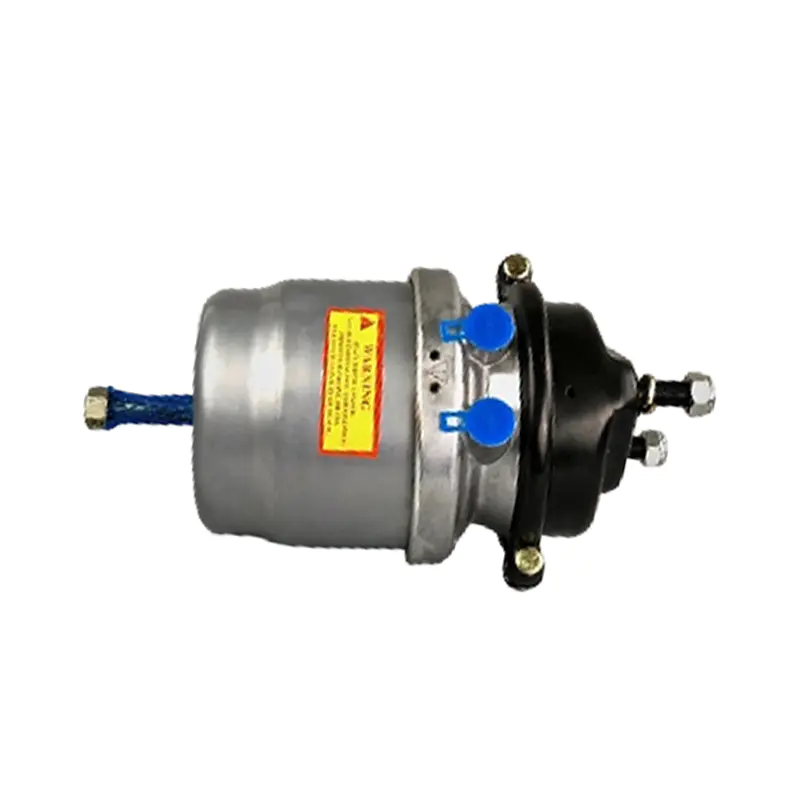
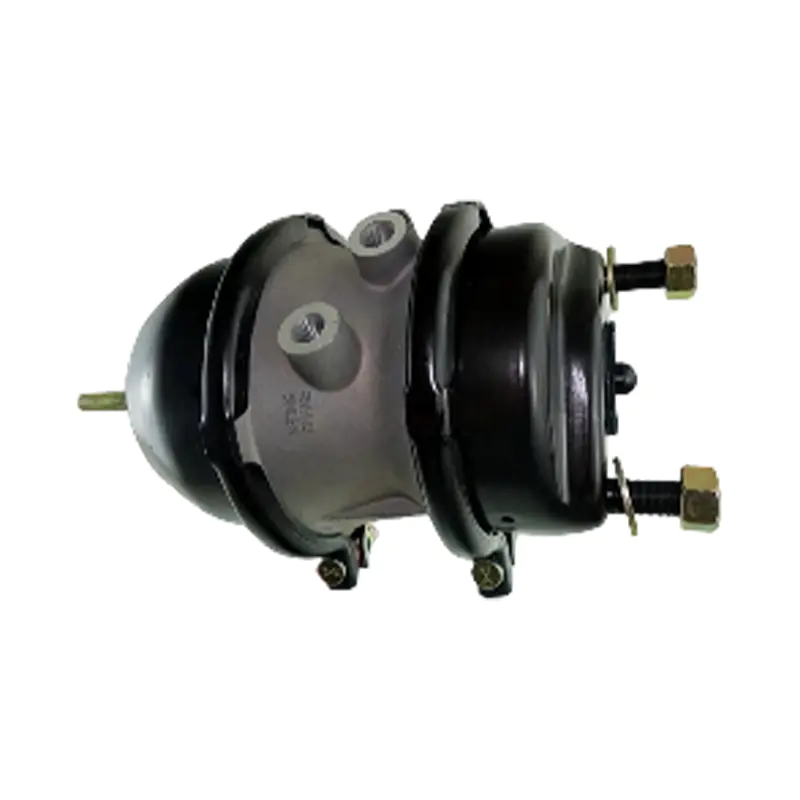
các brake air chamber is the core component that converts air pressure into mechanical force. A diaphragm or piston is arranged in the air chamber, which pushes the connecting rod after receiving the air pressure from the brake valve, and drives the brake shoe or brake pad to press the brake drum or brake disc. Brake chambers are divided into service brake chambers and spring brake chambers. The service brake chamber is mainly responsible for braking when the vehicle is driving, while the spring brake chamber is used for parking and emergency braking.
Buồng phanh lò xo
các spring brake chamber is equipped with a strong preload spring, which uses the mechanical force of the spring to maintain the braking state. This component is mostly used for parking brakes to ensure that the vehicle does not slip when parking. After the engine is started and inflated, the air pressure will compress the spring and release the braking state. The safety performance of the spring brake chamber is extremely important, and the integrity and air pressure of the spring need to be checked regularly.
Thanh kết nối phanh và bộ điều chỉnh
các brake connecting rod transmits the thrust of the brake chamber to the brake mechanism to complete the conversion of air pressure to mechanical force. The regulator is responsible for automatically or manually adjusting the gap between the brake shoe and the brake drum to compensate for the wear of the brake shoe and maintain the braking efficiency. The automatic regulator can reduce the frequency of manual adjustment and improve the stability and safety of the system.
Dây phanh
các brake line includes the air pipeline connecting the compressor, air tank, brake valve and air chamber. The pipeline material must be resistant to high pressure, corrosion and cold, and is usually made of a combination of rubber hoses and steel hard pipes. Reasonable pipeline design can prevent air pressure leakage and mechanical damage, and is the basis for ensuring the air tightness and stability of the brake system.
Van an toàn
các safety valve is installed at the air tank and key pipeline positions to prevent the system air pressure from exceeding the set upper limit. When the system air pressure rises abnormally, the safety valve automatically opens to release excess gas to avoid bursting of the air tank or pipeline and ensure system safety. The safety valve must be inspected regularly to ensure its reliability.
Thiết bị phụ trợ
các air brake system is equipped with a variety of auxiliary devices, such as barometers, air pressure alarms and pressure sensors. The barometer provides the driver with real-time air pressure information, and the air pressure alarm sounds an alarm when the air pressure is lower than the safety threshold, reminding the driver to deal with it in time. The pressure sensor provides data support for the vehicle's electronic control unit to ensure intelligent management of the system.
Buồng phanh chuyển đổi áp suất không khí thành lực cơ học như thế nào?
các brake chamber is a key actuator in the truck air brake system. Its core function is to convert the air pressure energy of compressed air into mechanical force, thereby driving the brake mechanism to slow down or stop the vehicle. The design structure and working principle of the brake chamber are directly related to the response speed of the brake system and the stability of the braking force.
Cấu trúc cơ bản của buồng phanh
các brake chamber is mainly composed of a chamber shell, a diaphragm (or piston), a push rod and a spring. The chamber shell is made of solid metal material, and the interior is divided into two main spaces: the air pressure chamber and the spring chamber. The diaphragm is usually made of wear-resistant rubber material, with good sealing performance and can withstand repeated changes in air pressure. The push rod connects the diaphragm or piston to transmit the thrust generated by the air pressure to the brake mechanical part.
Phân biệt chức năng giữa buồng áp suất không khí và buồng lò xo
các air pressure chamber is the part of the brake chamber that receives compressed air. Air enters the air pressure chamber from the brake valve through the pipeline, and the air pressure increases, pushing the diaphragm or piston outward. The spring chamber is equipped with a preloaded spring to provide reverse force and is used for parking brakes. When the air pressure is low, the spring force pushes the push rod back to the initial position and releases the brake state.
Nguyên lý làm việc chuyển đổi áp suất không khí thành lực cơ học
Khi người lái đạp bàn đạp phanh, van phanh sẽ đưa khí nén vào buồng áp suất không khí của buồng khí phanh. Áp suất không khí trong buồng áp suất không khí tăng lên nhanh chóng, tác động lên bề mặt màng ngăn để tạo ra lực đẩy. Độ lớn của lực đẩy tỷ lệ thuận với áp suất không khí và diện tích của màng ngăn. Cơ hoành nở ra bên ngoài dưới tác động của áp suất không khí, đẩy thanh đẩy được kết nối di chuyển theo chiều dọc. Chuyển động của thanh đẩy dẫn động thanh kết nối và cơ cấu điều chỉnh chuyển đổi năng lượng áp suất không khí thành lực cơ học tác dụng lên guốc phanh hoặc má phanh để đạt được lực kẹp của trống phanh hoặc đĩa phanh.
Truyền động cơ khí của chuyển động thanh đẩy
các end of the push rod is usually connected to the brake connecting rod through a pin or a ball head. The axial movement of the push rod drives the brake mechanism to work. The brake connecting rod converts the linear motion of the push rod into the clamping motion of the brake shoe, forming friction and generating braking force. The distance the push rod moves determines the magnitude of the braking force, and a reasonable push rod stroke design ensures the linearity and sensitivity of the braking effect.
các difference between diaphragm and piston and their influence
các diaphragm structure in the brake chamber uses a flexible diaphragm to transmit air pressure thrust. It has a simple structure and light weight, and is suitable for light and medium trucks. The piston chamber uses a rigid piston instead of a diaphragm, which has better sealing and is suitable for heavy vehicles. The piston structure reacts faster to changes in air pressure, and the mechanical force transmission is more stable, which improves braking performance and reliability.
Chức năng đặc biệt của buồng phanh lò xo
các spring brake chamber is equipped with a large preload spring outside the air pressure chamber, which is often used for parking brakes. During normal operation, the air pressure compresses the spring, the push rod is in a loose state, and the brake is released. When parking or emergency braking, the system air pressure is cut off, the spring releases energy to push the push rod, and the mechanical force acts on the brake mechanism to lock the wheel and achieve parking brake. The spring brake chamber ensures that the vehicle can remain in a safe parking state even if the air source is interrupted.
Độ kín khí và tốc độ phản hồi của buồng phanh
các air tightness inside the chamber directly affects the effective conversion and response speed of air pressure energy. Poor sealing will cause air pressure leakage, weaken the push rod pushing force, and increase the risk of brake failure. High-quality diaphragm materials and sealing design ensure that the brake chamber maintains good performance under extreme working conditions. The rapid air pressure charging and discharging process ensures rapid braking response and improves driving safety.
Bảo dưỡng và các biểu hiện lỗi của buồng phanh
Các lỗi thường gặp như vỡ màng ngăn buồng phanh, kẹt thanh đẩy hoặc mỏi lò xo có thể dẫn đến hỏng phanh hoặc hỏng phanh đỗ. Thường xuyên kiểm tra độ kín khí của buồng khí và phát hiện hành trình thanh đẩy, trạng thái lò xo là chìa khóa đảm bảo độ tin cậy của hệ thống phanh. Kiểm tra áp suất không khí và phát hiện rò rỉ có thể phát hiện trước những nguy hiểm tiềm ẩn và tránh tai nạn khi lái xe.
| Buồng phanh hành trình dài | |||||||||||||||||||||||||||||||||||||||||||||||||||||||||||||||||||||||||||||
|

Tại sao máy sấy khí lại quan trọng đối với hệ thống phanh hơi
Máy sấy không khís are an indispensable key component in truck air brake systems. Its main function is to remove moisture and impurities from compressed air to ensure the normal operation and long-term durability of the internal pipes and components of the brake system. The role of air dryers is directly related to the reliability, safety and maintenance cost of the brake system.
Độ ẩm trong khí nén và những mối nguy hiểm của nó
các air brake system relies on an engine-driven air compressor to supply high-pressure air. After the air is compressed, the temperature rises, and the water vapor in the air begins to condense into water droplets during the cooling process. If these moisture are not effectively treated, they will enter the air tank and pipeline with the air, causing a variety of serious problems. Condensed water accumulates inside the pipeline and may freeze in a low temperature environment, blocking the air path and causing brake failure. Moisture can also cause rust and corrosion of internal parts of the system, reduce equipment life and cause leaks. Excessive moisture can also affect air pressure stability and cause insensitive brake response.
Nguyên lý hoạt động của máy sấy khí
Máy sấy không khís are usually installed between the air compressor and the air tank. Its core part is a desiccant (such as silica gel or molecular sieve), which can efficiently absorb moisture from the air. When compressed air enters the dryer, moisture is absorbed by the adsorbent, and the air discharged after treatment remains dry and clean. Modern air dryers are mostly equipped with automatic drain valves to regularly discharge moisture and impurities accumulated in the adsorbent to prevent water accumulation and blockage, ensuring a long-lasting and stable drying effect.
Ngăn chặn sự cố băng trong hệ thống phanh
Trong môi trường nhiệt độ thấp, hơi ẩm trong đường dẫn khí rất dễ đóng băng, làm tắc van phanh và buồng khí, gây hỏng phanh thậm chí là xe mất khả năng điều khiển. Máy sấy khí loại bỏ độ ẩm một cách hiệu quả và ngăn chặn sự tích tụ nước ngưng tụ, giúp giảm đáng kể nguy cơ tắc nghẽn băng. Đặc biệt đối với các phương tiện di chuyển ở vùng có khí hậu lạnh hoặc vào mùa đông, tầm quan trọng của máy sấy khí đặc biệt nổi bật, nó trực tiếp đảm bảo sự an toàn và ổn định cho phanh xe.
Bảo vệ các bộ phận chính của hệ thống phanh
các internal pipes, valves, air chambers and air tanks of the braking system are all precision machinery and sealing components, which are extremely susceptible to moisture erosion. Long-term water vapor intrusion can cause metal rust, aging of sealing rings, and valve jamming, affecting braking performance. Air dryers extend the service life of these key components by providing dry air, reduce failure rates and maintenance costs, and improve the overall operating efficiency of vehicles.
Cải thiện độ ổn định áp suất không khí của hệ thống và tốc độ phản hồi
Độ ẩm quá mức có thể gây ra biến động và rò rỉ áp suất không khí, ảnh hưởng đến độ kín khí và độ ổn định áp suất không khí của hệ thống phanh. Máy sấy không khí có thể đảm bảo không khí đi vào bình khí và đường ống khô và tinh khiết, đồng thời đảm bảo cung cấp áp suất không khí ổn định. Áp suất không khí ổn định hỗ trợ hoạt động hiệu quả của buồng phanh, cải thiện tốc độ phản ứng phanh và lực phanh, đồng thời cải thiện độ an toàn khi lái xe.
Giảm khó khăn và chi phí bảo trì
Các hệ thống không có máy sấy không khí hoặc có hiệu quả làm khô kém đòi hỏi phải thoát nước thường xuyên, làm sạch đường ống và thay thế các bộ phận bị ăn mòn và hư hỏng, làm tăng tần suất và chi phí bảo trì. Máy sấy khí giúp giảm khối lượng công việc can thiệp và bảo trì thủ công bằng cách tự động hút ẩm và xả nước. Tỷ lệ lỗi hệ thống giảm, thời gian chạy của xe tăng và chi phí vận hành giảm đáng kể.
Các loại và kịch bản áp dụng của máy sấy không khí
Máy sấy không khí thông thường bao gồm máy sấy hấp phụ và máy sấy lạnh. Máy sấy hấp phụ hút ẩm qua chất hút ẩm, có cấu tạo đơn giản, được sử dụng rộng rãi trong hệ thống phanh hơi xe tải. Máy sấy lạnh ngưng tụ và xả hơi ẩm bằng cách hạ thấp nhiệt độ không khí, phù hợp với các yêu cầu môi trường đặc biệt. Các loại máy sấy khác nhau kết hợp với môi trường vận hành, điều kiện làm việc của xe để lựa chọn model phù hợp nhằm đảm bảo hiệu quả sấy tốt nhất.
Những điểm chính để bảo trì máy sấy không khí
Chất hút ẩm cần được thay thế thường xuyên để tránh hiện tượng bão hòa của chất hút ẩm. Chức năng van xả cần được duy trì bình thường để đảm bảo loại bỏ kịp thời nước ngưng tụ và tạp chất. Vỏ và giao diện của máy sấy không khí phải được kiểm tra xem có rò rỉ không và có hiệu suất bịt kín tốt không. Việc bảo dưỡng không đúng cách sẽ khiến máy sấy bị hỏng, từ đó ảnh hưởng đến hiệu suất an toàn của toàn bộ hệ thống phanh.
| Máy sấy khí hệ thống phanh | |||||||||||||||
|

Van phanh (van chân) điều khiển áp suất khí phanh như thế nào?
các brake valve, also known as the foot brake valve, is a key component in the truck air brake system where the driver directly controls the brake air pressure. Its main function is to accurately adjust the air pressure according to the force and stroke of the driver's foot on the brake pedal, and drive the brake chamber to achieve vehicle braking. The design and working principle of the brake valve directly affect the response speed, stability and safety performance of the brake system.
Cấu trúc cơ bản của van phanh
các brake valve is mainly composed of a valve body, a piston or a sliding valve, a spring, a sealing ring and an adjustment mechanism. There are multiple air passages inside the valve body, which are responsible for guiding the air flow. The piston or sliding valve moves under the action of the spring force and air pressure to control the air flow interruption. The brake pedal drives the piston to move through a mechanical connecting rod or an electronic sensor to complete the air pressure regulation.
Nguyên lý hoạt động của van phanh
Khi người lái đạp bàn đạp phanh, piston bên trong van phanh sẽ di chuyển về phía trước theo hành trình đạp phanh. Chuyển động của piston làm thay đổi trạng thái đóng mở của mạch khí bên trong thân van, đồng thời điều khiển không khí từ bình khí đến buồng áp suất không khí của buồng phanh. Đạp bàn đạp càng sâu thì van mở càng lớn và áp suất không khí đi vào buồng phanh càng cao. Áp suất không khí tăng lên đẩy màng ngăn hoặc piston của buồng phanh, tạo ra lực đẩy cơ học để phanh. Nhả bàn đạp, piston đặt lại, mạch khí đóng lại, áp suất không khí được giải phóng và phanh được nhả ra.
Kiểm soát chính xác việc điều chỉnh áp suất khí phanh
các brake valve achieves continuous variable adjustment of air pressure through an internal adjustment mechanism. The valve body is designed with a pressure adjustment spring and a feedback device, which can finely adjust the output air pressure according to the pedal force. Accurate air pressure control ensures a smooth transition of braking force, avoids braking shock and vehicle shaking, and improves driving comfort and safety.
Thiết kế mạch khí đa chiều và đảm bảo an toàn
các brake valve is equipped with multiple air circuits, which lead to different air tanks and air chambers to ensure stable air pressure supply. Some brake valves are equipped with a dual-circuit design, one circuit controls the front axle air chamber and the other controls the rear axle air chamber to improve braking safety. Some advanced brake valves also have an air pressure protection function. When the system air pressure is lower than the set value, the braking force is automatically limited to prevent brake failure.
Tốc độ phản ứng và hiệu suất bịt kín của van phanh
các internal sealing ring and air circuit design of the brake valve directly affect the response speed of air pressure changes. Efficient sealing prevents air leakage and ensures stable air pressure. The brake valve with a compact structure and reasonable spring force can quickly respond to the driver's braking command, achieve rapid braking response, and enhance driving safety.
Phối hợp van phanh chân và hệ thống phanh tay
các foot brake valve is mainly responsible for service braking during driving. The brake valve of some models integrates the parking brake function or is linked with the parking brake valve. The spring brake chamber is controlled by air pressure changes to realize the opening and release of the parking brake. The system design ensures that the parking brake and foot brake work together to meet different driving needs.
Biểu hiện bảo dưỡng, hư hỏng van phanh
Lão hóa của phớt van phanh, kẹt piston hoặc hỏng lò xo là những nguyên nhân phổ biến dẫn đến hỏng hóc. Điều này dẫn đến việc điều chỉnh áp suất không khí không nhạy, rò rỉ không khí hoặc phanh không đều. Thường xuyên kiểm tra độ kín khí, hành trình bàn đạp và tình trạng các bộ phận bên trong của van phanh để đảm bảo van phanh hoạt động bình thường. Nếu phát hiện lỗi thì cần sửa chữa hoặc thay thế kịp thời để tránh gây mất an toàn.
Van an toàn có vai trò gì trong hệ thống phanh hơi?
các safety valve is a vital protective component in the air brake system. It is responsible for releasing excess air pressure when the system pressure rises abnormally, preventing system components from being damaged by overpressure, and ensuring the safety and stable operation of the entire brake system. Although the safety valve does not directly participate in the braking action, it plays an important role in the operation of the system.
các basic structure and principle of the safety valve
các safety valve is usually composed of a valve body, a valve seat, a spring, a valve core and an adjustment mechanism. The valve core seals the valve seat under the action of the spring force to maintain the closed state of the system. The spring preload sets the maximum safe air pressure of the system. When the system air pressure exceeds the set value, the air pressure overcomes the spring force to push the valve core open, and the overpressure gas is released through the exhaust port. After the air pressure drops to a safe range, the spring resets the valve core, reseals the valve seat, and the system returns to normal working state.
Kiểm soát giới hạn trên của áp suất không khí để ngăn ngừa quá áp hệ thống
các air brake system is supplied with air by an air compressor. If the control system fails or the compressor continues to work without stopping, the air pressure may continue to rise. Overpressure can damage and even burst components such as air reservoirs, brake valves, pipelines, and air chambers. The safety valve opens the exhaust in time before the air pressure reaches a dangerous level through the set opening pressure (usually 10%~15% of the upper limit of the system working pressure), playing the role of "the last line of defense" to avoid system damage and accidents.
Bảo vệ máy nén khí và các bộ phận mạch khí
các air compressor is a high-frequency component in the brake system, and it is very easy to be damaged due to excessive back pressure during long-term operation. The safety valve releases excess air pressure in the system compression chamber or the main air tank, effectively reducing the compressor load and preventing problems such as shaft seal damage and cylinder jamming caused by back pressure. At the same time, the safety valve also protects the pipeline interface and air circuit valve to avoid impact rupture caused by sudden pressure changes and extend the service life of the system.
Đảm bảo hoạt động ổn định của hệ thống phanh xe
các air brake system must operate in a stable air pressure environment. Excessive air pressure not only damages the components, but also causes excessive braking response and excessive braking force, causing tire locking and vehicle loss of control. The safety valve limits the peak pressure and keeps the system pressure within a safe range, ensuring that the braking response is linear and controllable, and enhancing the driver's sense of safety and predictability.
các rationality of the set pressure value and the system match
các opening pressure of the safety valve should be higher than the normal working pressure of the brake system (usually 0.81.0 MPa), but lower than the maximum pressure bearing capacity of the system. It is generally set to 1.11.2 MPa. If the pressure is set too low, it is easy to open frequently and cause unstable air pressure; if it is set too high, it loses its protective effect. Reasonable setting requires comprehensive consideration of factors such as vehicle air path volume, braking frequency, and compressor air output to ensure that the safety valve intervenes only under real overpressure conditions, taking into account safety and system efficiency.
Vị trí lắp đặt và phạm vi hoạt động của van an toàn
các safety valve is usually installed on the main air tank or the main line of the total air path, giving priority to releasing the total pressure of the system. Some systems are also equipped with local safety valves on branch air tanks or independent air paths to protect branch circuit components. The installation location should ensure smooth exhaust and stay away from high temperature or flammable areas to prevent secondary risks caused by exhaust. The multi-level protection design enhances the robustness of the system and improves the safety level of the vehicle.
Yêu cầu về vật liệu và độ bền của van an toàn
Van an toàns are subjected to high-pressure gas for a long time, and key components such as valve cores, springs, and valve seats must have high strength, corrosion resistance, and fatigue resistance. Common materials include stainless steel, chromium-molybdenum alloy, engineering plastics, etc. The sealing part must have high temperature resistance and pressure change resistance to ensure that the valve remains sealed reliably during high-frequency opening and closing to avoid air pressure leakage or malfunction.
Kiểm tra bảo trì và nguy cơ hỏng hóc của van an toàn
Van an toàns are passive action devices. Long-term non-operation is prone to problems such as spring fatigue, valve core jamming, and seal aging. Regular opening and closing tests, cleaning of carbon deposits and foreign matter, and testing of opening pressure are necessary means to maintain its functional reliability. A failed safety valve may not be able to open when overpressure occurs, resulting in system damage or accidents; it may also open prematurely, affecting the inflation speed and efficiency of the brake system.
Phối hợp giữa van an toàn và hệ thống điều chỉnh áp suất
Hệ thống phanh hơi thường được trang bị bộ điều chỉnh áp suất, công tắc áp suất và van an toàn hoạt động cùng nhau. Bộ điều chỉnh áp suất điều khiển khởi động và dừng máy nén, công tắc áp suất giám sát phản hồi áp suất không khí và van an toàn được sử dụng như một thiết bị bảo vệ dự phòng để đảm bảo rằng nhiều cơ chế an toàn hoạt động hiệu quả. Việc thiết kế và điều chỉnh van an toàn phải được phối hợp với toàn bộ hệ thống kiểm soát áp suất không khí để tránh các chức năng kích hoạt hoặc chồng chéo sai và cải thiện sự an toàn chung của hệ thống.
Ưu tiên bảo trì hàng ngày của hệ thống phanh hơi là gì?
Là một thiết bị an toàn quan trọng trên các phương tiện hạng nặng (như xe tải, xe buýt và rơ moóc), độ ổn định khi vận hành của hệ thống phanh hơi liên quan trực tiếp đến hiệu quả phanh và an toàn giao thông của toàn bộ phương tiện. Hệ thống này bao gồm máy nén khí, bình chứa khí, máy sấy, van phanh, buồng khí phanh, ống dẫn khí và nhiều bộ phận điều khiển khác nhau. Nó có cấu trúc phức tạp và hoạt động thường xuyên. Việc bảo trì hàng ngày một cách khoa học và tiêu chuẩn không chỉ có thể kéo dài tuổi thọ của hệ thống mà còn ngăn ngừa hiệu quả tình trạng phanh đột ngột bị hỏng.
Kiểm tra độ kín khí của hệ thống
các air tightness of the system is the core of ensuring stable air pressure. During maintenance, it is important to check whether there is air leakage at various pipe joints, hoses, connectors, welds of air reservoirs, and valve body interfaces. Use soapy water smearing method or a special leak detector to detect subtle leaks. For rubber hoses, check whether they are aging, cracked, or falling off. Good air tightness can prevent the system air pressure from dropping too quickly, ensuring the reliability of emergency braking and parking brakes.
Thường xuyên xả nước và tạp chất ra khỏi bình chứa khí
các air tank is a gathering place for compressed air and is also the main area for condensed water and impurities to deposit. If it is not discharged in time, the water will corrode the cylinder, block the valve, and seriously affect the braking response. The air tank drain valve should be opened every day after parking to drain manually, especially in an environment with high humidity or low temperature. Some vehicles are equipped with automatic drainage devices, and their drainage function should also be checked regularly to prevent water accumulation.
Kiểm tra tình trạng hoạt động của máy sấy khí
các air dryer is the first line of defense to prevent moisture from entering the brake system. It is necessary to regularly check whether the dryer filter element or adsorbent is saturated and ineffective. If it is found that the drying effect has deteriorated or a large amount of water is discharged from the air tank, the dryer filter element should be replaced in time. Note that the dryer exhaust port should be unobstructed and the exhaust valve should be sensitive to prevent water accumulation or freezing.
Giữ cho van phanh phản ứng nhanh
các brake valve is the most directly related component of the air brake system to the driver's control. The brake valve pedal stroke should be checked regularly to see if it is appropriate, if the action is smooth, and if there is any jamming, air leakage or poor return. Check if the air chambers respond consistently during braking to avoid brake deflection or tail swinging due to asynchronous braking of the front and rear wheels. Disassemble and clean or replace seals if necessary.
Kiểm tra tình trạng buồng phanh và thanh đẩy
các brake chamber converts air pressure into mechanical braking force, and its reliability directly affects the braking effect. Focus on checking whether the air chamber shell is deformed, rusted or cracked, whether the push rod is freely retracted, and whether the dust cover is intact and undamaged. The spring mechanism of the parking brake spring chamber must function normally and the exhaust channel must be unobstructed. The push rod stroke must meet the manufacturer's standards to avoid insufficient braking force or damage to the air chamber.
Giữ chắc chắn đường ống dẫn khí và mối nối
các air pipe connecting the various components in the brake system needs to have sufficient pressure resistance and heat resistance. Check the pipeline for looseness, detachment, rupture, expansion or wear on a daily basis. In particular, the hoses at the chassis or active parts of the vehicle are susceptible to vibration and dust. The connection joints should be tightened reliably, and the quick-connect joints should be cleaned of foreign objects regularly to prevent leakage. Pipes used for a long time should be replaced according to the degree of aging.
Kiểm tra hệ thống phanh khẩn cấp và phanh đỗ
Phanh khẩn cấp và phanh đỗ là những cơ cấu quan trọng để đảm bảo xe vẫn có thể dừng lại một cách đáng tin cậy khi bị ngắt ga hoặc tắt động cơ. Việc bảo trì hàng ngày phải xác minh xem buồng khí phanh lò xo có thể tự động áp dụng phanh khi ngắt ga hay không. Cần gạt hoặc công tắc đỗ xe phải chính xác và nhạy. Khả năng duy trì áp suất đỗ xe sau khi hệ thống cắt phải đạt tiêu chuẩn để tránh xe bị trượt do rò rỉ áp suất không khí.
Phát hiện đồng hồ đo áp suất và thiết bị báo động
các pressure gauge on the instrument panel is an important basis for the driver to understand the system status. It is necessary to confirm that the pressure gauge display is accurate and without deviation on a daily basis. The high-pressure and low-pressure alarm indicators and buzzers should alarm in time when the air pressure is abnormal. If necessary, check the working status of the electrical circuit and sensor to avoid blind driving caused by the failure of the alarm system.
Thực hiện kiểm tra độ ổn định áp suất không khí của hệ thống
Quan sát tốc độ tăng áp suất không khí bằng cách cho động cơ chạy ở tốc độ không tải và kiểm tra xem công suất máy nén có đủ hay không. Hệ thống cần duy trì tốc độ giảm áp suất sau khi tắt động cơ để đạt tiêu chuẩn. Có thể quan sát thời gian phản hồi của phanh và tốc độ giảm áp suất bằng cách đạp bàn đạp phanh theo cách thủ công để đánh giá khả năng phản hồi của hệ thống và khả năng chứa khí.
Sản phẩm chính của chúng tôi
Tin nóng
Bản quyền© Zhejiang Gongzheng Machinery Co., Ltd. Bảo lưu mọi quyền.
